


The Draw of the Mayan Heartland – Guatemala
If you’re an artist — or just someone who wants to see the world more fully — Guatemala offers something rare. It’s not just beautiful. It’s alive with meaning, texture, contradiction, and joy
After our inaugural “Travelling Brush” art tour to Cuba in 2005, the question from our students came quickly: “Where to next?” The answer arrived in the form of a country teeming with vibrant culture, layered history, and breathtaking landscapes — Guatemala. In 2006, we led our first of many painting-focused tours to this Central American gem. In the following article, I will try — and surely fall short — to explain the inexplicable pull I feel toward the heartland of Mayan culture: a quiet longing for a place that feels both foreign and strangely comfortable.
A Past That Shapes the Present: Guatemala’s Civil War and Recovery
To fully appreciate Guatemala’s depth, one must understand its complex and often painful past. The nation’s modern history was profoundly shaped by a CIA-backed coup in 1954, which overthrew the democratically elected president, Jacobo Árbenz. His government had attempted much needed land reforms that threatened U.S. business interests, particularly those of the United Fruit Company.
What followed was decades of political instability, culminating in a brutal civil war that raged from 1960 to 1996. Over 200,000 people — the vast majority Indigenous Maya — were killed or disappeared during the conflict. The war left deep scars, but also a resilient spirit in the Guatemalan people. Today, while echoes of that era still linger, Guatemala has emerged with a renewed focus on cultural expression, reconciliation, and community rebuilding.
Having returned to Guatemala many times over the last two decades, I’ve come to understand that this country doesn’t just ask to be visited — it asks to be seen. It’s a place where history and beauty exist side by side, often in complex, challenging, and moving ways. It’s not just inspiring for artists — it’s sacred.
Reading Rigoberta Menchú’s memoir, I, Rigoberta Menchú, during my first trip to Guatemala deepened my reverence for the Indigenous Maya—people who continue to shape this land and its stories with enduring strength. Menchú, a K’iche’ Maya woman and Nobel Peace Prize laureate of 1992, rose to global prominence through her fearless activism for Indigenous rights and social justice. Through her words, I became more aware of the layers of history, survival, and resilience woven into every corner of Guatemala. Each time I return, that awareness fuels my creative spirit, inspiring me to capture not just the landscape, but the soul and stories of a people whose legacy demands to be seen and honoured.
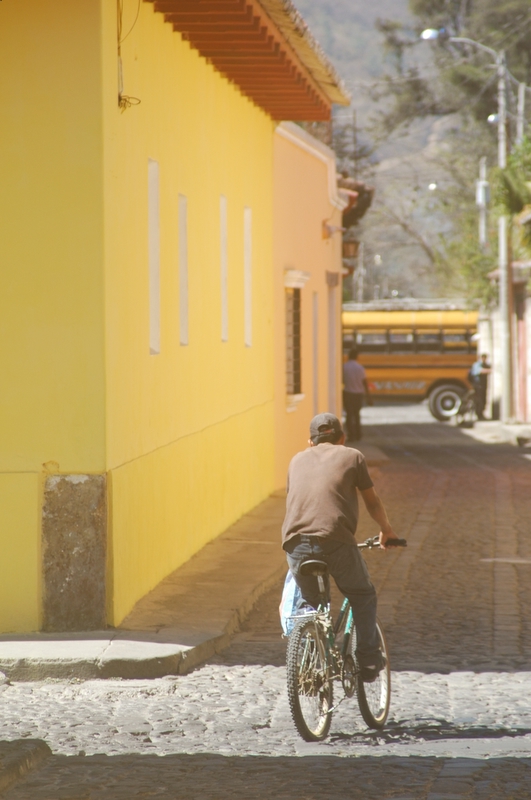
Antigua is often where this journey begins. With its sun-faded facades, cobblestone streets, and baroque churches standing like theater sets from another century, it’s a city made for wandering — and for painting. I’ve spent quiet mornings sketching beneath jacaranda trees in the central park, and afternoons chasing shifting light through the ruins where vibrant bougainvillea climb weathered stone walls. Sometimes locals pause to watch us paint, sometimes they nod and continue on, but there’s always a feeling that we’re not merely observing the city — we become part of its living rhythm, if only for a moment.
One of my most unforgettable experiences was visiting Antigua during Semana Santa, Holy Week, when the city transforms into a living canvas of faith and tradition. The streets become vibrant with massive processions, where somber music drifts through the air like a haunting melody. Beneath the feet of the procession bearers stretch alfombras — intricate carpets made from colored sawdust, flowers, and fruit — ephemeral artworks crafted overnight, only to be walked upon and swept away. This fleeting beauty, woven with devotion, captures the spirit of sacrifice and renewal, echoing the layers of history that saturate Antigua’s stones.
From Antigua, our explorations have taken us far and wide — to the black-sand beaches of Monterrico on the Pacific coast, where the ocean crashes relentlessly and sea turtles nest beneath the moonlight, or where the morning birds call as we drift effortlessly through the mangroves. Then on to the ethereal waters of Lake Atitlán, an impossible mirror reflecting volcanoes and sky, where each lakeside village tells its own unique story.
Our base is often Panajachel, a town affectionately nicknamed “Gingocastenango” by locals—a playful nod to the many American expats who once sought refuge here during the Vietnam War draft. From this vibrant town, we venture into the highlands to visit dynamic Mayan communities like San Pedro, alive with youthful creativity and home to my dear friend Maribel, who graciously opens her home for authentic cooking classes, including lively market excursions to gather fresh, local ingredients.
Nearby, San Juan La Laguna offers quieter moments of reflection. No visit is complete without stopping at our favourite four-generation women’s weaving cooperative, where ancient techniques are lovingly preserved and celebrated. Each thread tells stories centuries old—stories that continue to inspire both my work and my heart.
What sets this trip apart is how art becomes both a purpose and a process. We paint in bustling plazas and tranquil gardens, sketch aboard boats, and draw amid ancient ruins. We take time—real time—to absorb the world around us. By the journey’s end, it’s never just about the sketches in your book or the colours on your canvas. It’s about the conversations shared, the meals enjoyed together, the quiet mornings, and the human connections forged along the way.
Returning to Antigua always feels like coming home. The city embraces you like the frame around a finished painting—the perfect place to gather, reflect, and celebrate what we’ve seen and created. We hold informal exhibitions of our work, exchange feedback, and raise a glass to the unforgettable experience.
For those seeking to go even deeper, the extension to Tikal is truly unforgettable. Walking through jungle-cloaked ruins, hearing howler monkeys echo overhead, and watching ancient temples emerge from the mist reminds us that Guatemala’s beauty runs far beyond the surface—it flows through time and spirit.
If you’re an artist — or just someone who wants to see the world more fully — Guatemala offers something rare. It’s not just beautiful. It’s alive with meaning, texture, contradiction, and joy. And for those willing to bring their sketchbook, camera, or open eyes, it offers an invitation you won’t soon forget. Join us January 2026.




If you’re an artist — or just someone who wants to see the world more fully — Guatemala offers something rare. It’s not just beautiful. It’s alive with meaning, texture, contradiction, and joy

Pueblos Mágicos, what an amazing way to break in the new year with the Travelling Brush. We had a small group of artists for this very unique art trip to of some of my favourite places in Mexico. Our group arrived January 3rd, starting our tour in this amazing Capital, if you have never been to Mexico City, there is a heap of cool things to see and do including some world class museums. Our first day included a visit …
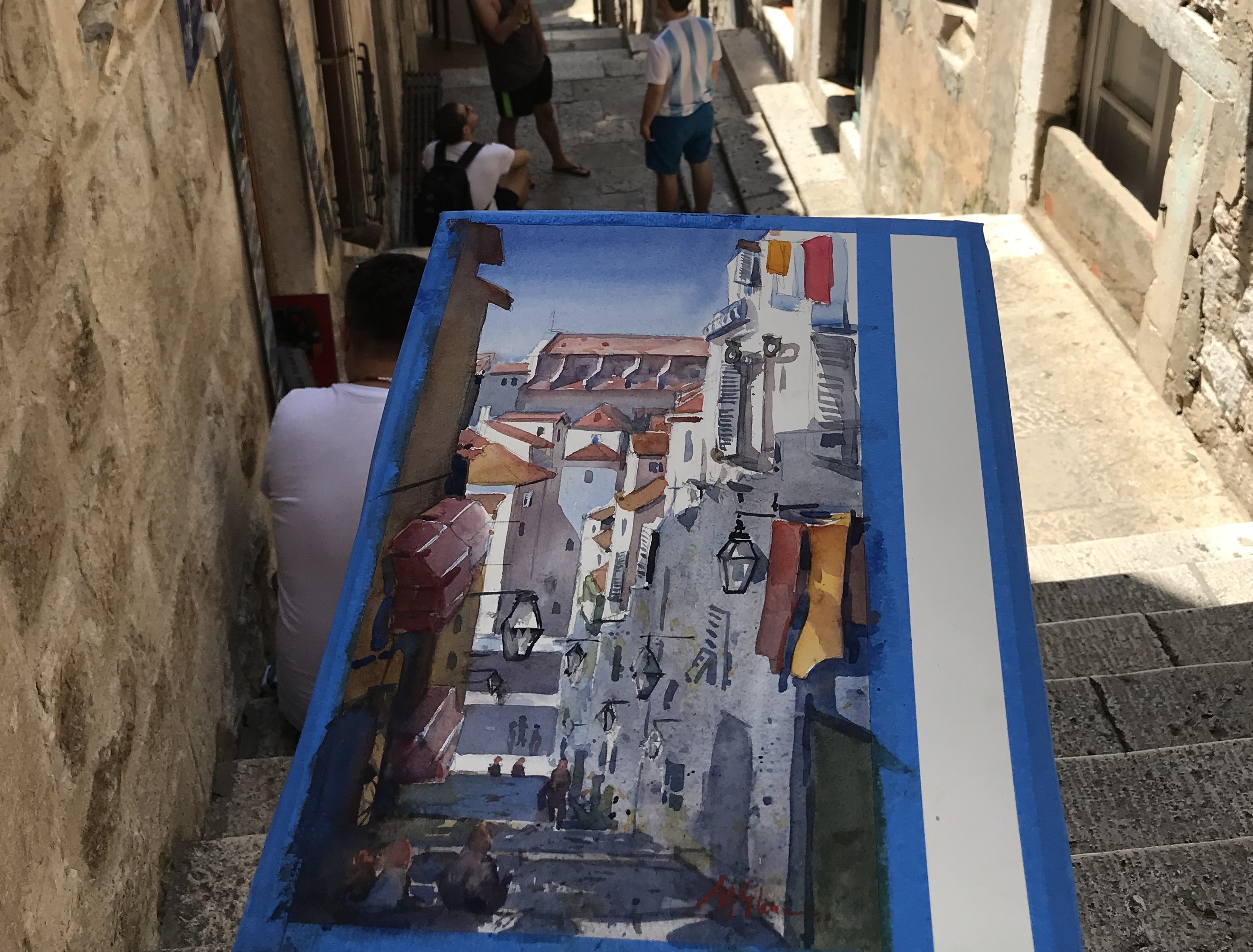
I was attracted to this high vantage point because of the challenging perspective; as I painted I learned about Dubrovnik from the perspective of two locals caught in the daily riggers of mass tourism. Our painting group arrived in Dubrovnik after a beautiful drive down the coast from Split with a short interlude into Bosnia and Herzegovina in order to cross the Neretva River, along the famous 16th-century Ottoman bridge. Stari Most Bridge connects the two parts of the City …